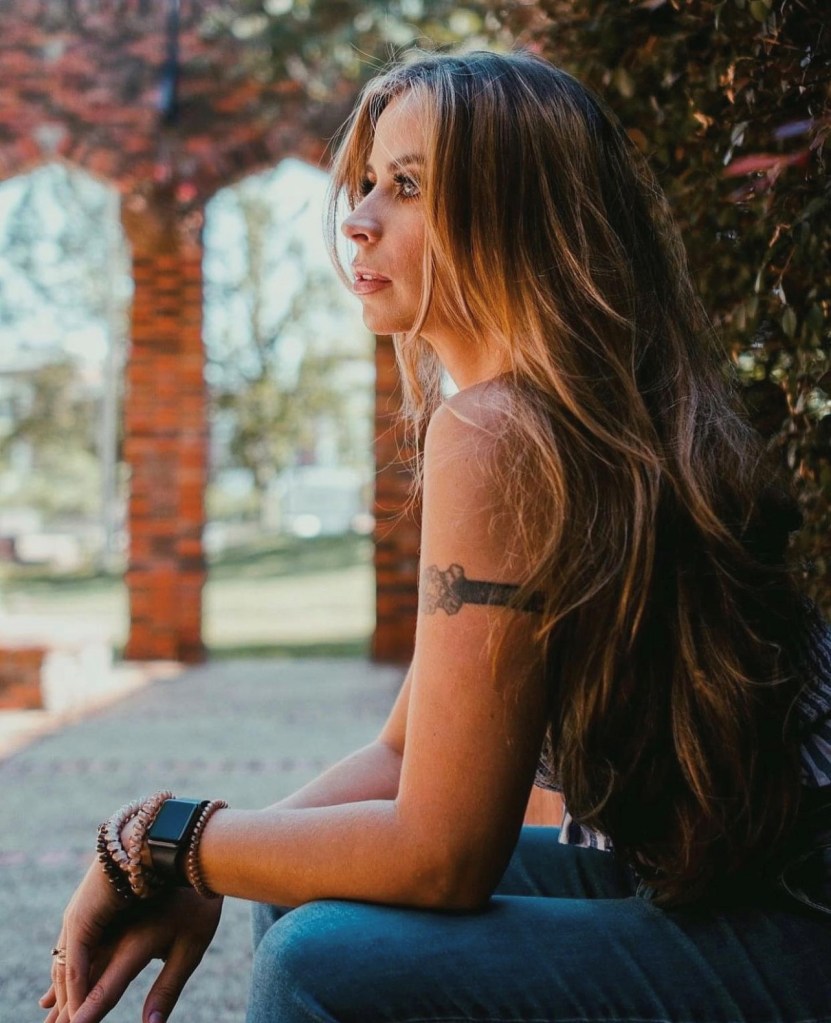
Ms. Heather Bass is the Laboratory Supervisor at Tennessee Valley Archaeological Research. She earned her her B.A. in Anthropology from Mississippi State University, and her interests focus on the prehistory of Southeastern North America with a primary focus in ceramics.
What area do you work in/what is your field of study?
I work as a laboratory supervisor in Cultural Resource Management. Our firm conducts cultural resource management projects on all phases of archaeological investigations in the southeastern United States. My job duties include artifact analysis, research, artifact data entry, composing laboratory chapters for our reports, curation, artifact photography, etc.
Is it difficult to learn how to find artifacts or dig for them?
Absolutely not! With each phase of archaeological investigation, there are different methodologies to conduct field work. I have found that the most challenging/time consuming duty of field work is actually mapping out your findings, whether on paper, TopCon, or Trimble.
How did you first get started in this field and/or what were some of the most important steps or influences on your journey to becoming a scientist in this field?
This is a long one. I grew up in backwoods Mississippi. I was the first person in my family to attend university. Although this was incredibly exciting, I had NO idea what kind of career I wanted to pursue. In the middle of this discovery, I started taking some prerequisites, one of which was Intro to Anthropology. This class completely changed my outlook and everything I thought I knew growing up. I started to challenge all of my prior thought processes, as well as my views on my religion at the time. After finishing that course, I knew that I wanted to pursue a career in Archaeology, but honestly, I still didn’t really know what kind of career that would entail. It wasn’t until I started taking more and more classes, as well as reaching out with professors within the department that I realized that I wanted to work in Cultural Resource Management.
I would consider the most important step to become a scientist in this field is to become as efficient as possible at the job you are wanting to do. Make connections- but GENUINE connections with your peers, professors, etc.
My Reflection:
First off, I just want to say how fun and interesting it was to read Ms. Bass’s responses! I’m super grateful she took time to write these out for me, because I really have learned quite a bit just from reading these few paragraphs! I really liked reading about what she does at her job, and the different aspects, like artifact photography, curation, and analysis. This all sounds really interesting to me, and it was cool to read about how you can be an archaeologist/anthropologist and work in a lab, as opposed to working as a teacher or in the field. I also found Ms. Bass’s response to the last question really interesting and unique to read. I totally agree with her on how learning about history and science can really change and challenge our lifelong thoughts and ideas about life. This just goes to show how important history and science is, because of how heavily it impacts us, even today. Lastly, I really appreciated her note at the end about how making connections is important. I completely agree, and that is part of what I hope to do with these interviews! Thank you so much to Ms. Bass for contributing to my project, and for letting me learn a little bit about her!
 The Rosalind Project